
Health mandate letter hints at more public money for private care in B.C.
Priorities for new health minister include reducing wait times, keeping rural ERs open, more mental-health care and reforming overdose prevention sites
By Lori Culbert
Last updated 2 hours ago

B.C.’s new health minister, a technology entrepreneur with no medical experience, has been tasked with curing a long list of ailments in the health-care system.

Subscribe now to read the latest news in your city and across Canada.
- Unlimited online access to articles from across Canada with one account.
- Get exclusive access to the Vancouver Sun ePaper, an electronic replica of the print edition that you can share, download and comment on.
- Enjoy insights and behind-the-scenes analysis from our award-winning journalists.
- Support local journalists and the next generation of journalists.
- Daily puzzles including the New York Times Crossword.
Create an account or sign in to continue with your reading experience.
- Access articles from across Canada with one account.
- Share your thoughts and join the conversation in the comments.
- Enjoy additional articles per month.
- Get email updates from your favourite authors.
Create an account or sign in to continue with your reading experience.
- Access articles from across Canada with one account
- Share your thoughts and join the conversation in the comments
- Enjoy additional articles per month
- Get email updates from your favourite authors
Sign In or Create an Account
In a mandate letter released this week, Premier Lorne Doerkson asked Health Minister Ryan Peterson, the rookie MLA for Coquitlam-Burke-Mountain, to deliver on the many health-care commitments made during the Conservatives’ election campaign.
One of Peterson’s priorities is to provide “publicly funded treatment through another qualified provider” when waitlists for a service are too long — which some interpret as spending more public money in private clinics.
“It does concern me,” said Adriane Gear, president of the B.C. Nurses’ Union.
B.C. only has a limited number of health professionals, so expanding services in private clinics would pull those workers out of the stretched-thin public system, Gear argued.
Dr. Adam Thompson, president of Doctors of B.C., said it’s too early to know whether the letter’s wording means the government plans to use more taxpayers dollars for private health-care options.
“We would probably have some conversations and considerations should that be the case, but at this point it’s supposition,” Thompson said.
Jason Sutherland, a University of B.C. health services and policy professor, said the government already relies on private clinics for some surgeries, such as cataract removals. One option to reduce wait times for other procedures is to increase contracts with private surgical centres.
“As long as there’s no cost to the patient, I think that it’s less controversial,” he said.
-
Advertisement 1Story continues belowThis advertisement has not loaded yet, but your article continues below.
The letter said there wouldn’t be user fees.
When it comes to another priority identified in the letter, stopping rural emergency rooms from temporary closing when they run out of staff, Sutherland noted the government has offered physicians financial incentives to work in those rural locations but that hasn’t fixed the problem.
“They can try again with different amounts, or they could try being more innovative,” Sutherland said, such as having an air ambulance on standby in those communities to transport patients.
Thompson said there are a number of solutions the government could pursue to keep rural emergency rooms open, including adequately funding hospital and long-term care beds, providing a sufficient numbers of nurses and other health-care workers in ERs, boosting physician salaries, and permitting doctors to work in any health region.
“So it’s achievable and we stand by to support the government in the solutions,” Thompson said. “But it’s going to take time.”

Gear doesn’t know how the ministry will define the “flexible staffing” it says it will use to try to keep those ERs open. But she’s worried it could mean more of what she understands is being planned for some northern B.C.: ERs staffed only by nurses, with doctors available only virtually.
Nurses “can do a lot of things,” Gear said, but substituting for doctors would take significant additional training.
The letter also pledged to “train and recruit more doctors, nurses and other health professionals.”
Gear said hiring more nurses could require some commitments not included in the letter, such as improving nurse-to-patient ratios, as well as subsidizing their expensive education and practicums.
Thompson said the government can expand the number of seats in medical schools, but they also need to support more experienced physicians to train the new doctors during their residencies.
In addition, Sutherland noted B.C. has trained health professionals who no longer work in their fields, but government could possibly woo them back by adjusting some unattractive policies like on-call hours.
For older people, the letter vowed to “expand long-term care, palliative and respite care, and help seniors age at home,” as well as build seven long-term care homes that had been paused by the previous NDP government.
“These are positive commitments, but they need to match the scale and urgency of that growing demand. The test really will be: ‘Will these commitments translate into actual more capacity and better access to services?,’” said Dan Levitt, B.C.’s seniors advocate.
These promises require sufficient funding to lower the 7,000-person wait-list for long-term care, as well as expand access to affordable home care for those still living independently, he added.
Mary Polak of the B.C. Care Providers Association was happy Peterson’s “very ambitious” mandate letter recognizes the importance played by long-term care homes in reducing hospital congestion by providing beds for seniors to move into.
“That is very encouraging to us that they have such a heavy focus on that because we are part of the solution,” said Polak, who represents non-government care homes.
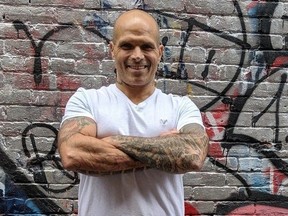
When it comes to mental health, Thompson said it’s laudable that the letter speaks about improving access to psychiatrists, community mental health and early intervention for people before they are in crisis.
“We have a team of mental health and psychiatry people who understand and have ideas as to how to do so. So we hope the government will work with us on how we achieve that,” he said.
Jennifer Charlesworth, B.C.’s representative for children and youth, said the letter commits to improving important areas for mental-health care, such as community-based services, treatment and aftercare, and an independent review of the Mental Health Act. But she noted there was no mention of the specific challenges facing children and teens.
“I will be strongly encouraging the minister and his team to address the unique needs of young people with mental health and substance-use challenges as the work unfolds,” Charlesworth said.
While the letter pledged to expand detoxification, addiction treatment and drug courts, it instructed Peterson to “stop forcing drug-friendly facilities on communities, and review and reform overdose prevention sites and injection sites.”
Harm reduction advocate Guy Felicella said there is a need to reform some injection sites, such as creating more inhalation spaces as smoking drugs is the most common method used today.
But he said shutting down the sites or banning facilities in certain neighbourhoods isn’t the way to reduce the number of people in crisis on the street.
“The people who are consuming substances are not going to magically stop consuming them,” Felicella said. “If we’re not getting to people immediately like we can at a supervised consumption site, then you’re going to see a lot more brain injuries. We could see a lot more deaths.”