
B.C. climate news: Province funds Youth Climate Corps B.C. | Europe heat dome pushes temperatures over 40 C
Here’s all the latest local and international news concerning climate change for the week of June 22 to June 28, 2026.
You can save this article by registering for free here. Or sign-in if you have an account.

Here’s the latest news concerning climate change and biodiversity loss in B.C. and around the world, from the steps leaders are taking to address the problems, to all the up-to-date science.

Subscribe now to read the latest news in your city and across Canada.
- Unlimited online access to articles from across Canada with one account.
- Get exclusive access to the Vancouver Sun ePaper, an electronic replica of the print edition that you can share, download and comment on.
- Enjoy insights and behind-the-scenes analysis from our award-winning journalists.
- Support local journalists and the next generation of journalists.
- Daily puzzles including the New York Times Crossword.
Subscribe now to read the latest news in your city and across Canada.
- Unlimited online access to articles from across Canada with one account.
- Get exclusive access to the Vancouver Sun ePaper, an electronic replica of the print edition that you can share, download and comment on.
- Enjoy insights and behind-the-scenes analysis from our award-winning journalists.
- Support local journalists and the next generation of journalists.
- Daily puzzles including the New York Times Crossword.
Create an account or sign in to continue with your reading experience.
- Access articles from across Canada with one account.
- Share your thoughts and join the conversation in the comments.
- Enjoy additional articles per month.
- Get email updates from your favourite authors.
Create an account or sign in to continue with your reading experience.
- Access articles from across Canada with one account
- Share your thoughts and join the conversation in the comments
- Enjoy additional articles per month
- Get email updates from your favourite authors
Sign In or Create an Account
Check back every Saturday for more climate and environmental news or sign up for our Sunrise newsletter HERE.
In climate news this week:
• Province funds Youth Climate Corps B.C.
• Europe heat dome pushes temperatures over 40 C
• Evacuation order issued for properties near Pemberton because of potential glacier flooding
Human activities like burning fossil fuels and farming livestock are the main drivers of climate change, according to the UN’s intergovernmental panel on climate change. This causes heat-trapping greenhouse gas levels in Earth’s atmosphere, increasing the planet’s surface and ocean temperature.
The panel, which is made up of scientists from around the world, including researchers from B.C., has warned for decades that wildfires and severe weather, such as the province’s deadly heat dome and catastrophic flooding in 2021, would become more frequent and intense because of the climate emergency. It has issued a code red for humanity and warns the window to limit warming to 1.5 C above pre-industrial times is closing.
According to NASA climate scientists, human activities have raised the atmosphere’s carbon dioxide content by 50 per cent in less than 200 years, and “there is unequivocal evidence that Earth is warming at an unprecedented rate.”
As of June 5, 2026, carbon dioxide in the atmosphere was 432.34 parts per million, up slightly from 431.12 ppm the previous month, according to the latest available data from the NOAA measured at the Mauna Loa Observatory, a global atmosphere monitoring lab in Hawaii. The NOAA notes there has been a steady rise in CO2 from under 320 ppm in 1960.

-
Advertisement 1Story continues belowThis advertisement has not loaded yet, but your article continues below.
Quick facts:
• The global average temperature in 2023 reached 1.48 C higher than the pre-industrial average, according to the EU’s Copernicus Climate Change Service. In 2024, it breached the 1.5 C threshold at 1.55 C.
• 2025 was the third warmest on record after 2024 and 2023, capping the 11th consecutive warmest years.
• Human activities have raised atmospheric concentrations of CO2 by nearly 49 per cent above pre-industrial levels starting in 1850.
• The world is not on track to meet the Paris Agreement target to keep global temperature from exceeding 1.5 C above pre-industrial levels, the upper limit to avoid the worst fallout from climate change including sea level rise, and more intense drought, heat waves and wildfires.
• UNEP’s 2025 Emissions Gap Report, released in early December, shows that even if countries meet emissions targets, global temperatures could still rise by 2.3 C to 2.5 C this century.
• In June 2025, global concentrations of carbon dioxide exceeded 430 parts per million, a record high.
• There is global scientific consensus that the climate is warming and that humans are the cause.
Latest News
Government provides funding for Youth Climate Corps B.C.
The B.C. government says it will provide an additional $1.4 million for the Youth Climate Corps B.C.
The funding is on top of the $3 million provided in 2024 to expand youth climate employment opportunities throughout the province.
“Young people in B.C. care deeply about the environment and want an active role in tackling climate change,” said Premier David Eby in a statement.
“We are creating opportunities for them to do just that. By strengthening the Youth Climate Corps B.C., young people will be able to build valuable skills and experience while helping their communities become more resilient and better prepared for future challenges.”
Youth Climate Corps B.C. connects young people between 17 and 30 with paid work and training opportunities that support local climate priorities. Projects focus on areas such as wildfire-risk reduction, ecosystem restoration, energy efficiency, food security, community engagement and the sharing of traditional ecological knowledge.
—Tiffany Crawford
Extreme heat across the south of the U.K. is shutting schools and disrupting travel, after overnight thunderstorms led to flash floods in parts of London.
The Met Office has issued an unusual red warning for extreme heat for a swath of southern England and Wales from 9 a.m. on Wednesday until 9 p.m. on Thursday. Temperatures are expected to climb to a June record of at least 39 C.
Climate change means that U.K. summers are getting warmer, with more frequent and intense heat waves, according to researchers and data from the U.K. Met Office. The current blast of heat is spreading north from the continent, driven by a high-pressure heat dome and jet stream changes triggered by a developing El Niño.
While maximum temperatures over the coming days are relatively tame compared to extreme heat recorded elsewhere in Europe and the world, many homes, buildings and other infrastructure weren’t built to cope with soaring temperatures. On Monday, 43.3 C was recorded at Chateaumeillant in France, according to government forecaster Météo-France.
The extreme weather coincides with the London Climate Action Week. The estimated cost of climate change without additional adaptation is 60—260 billion pounds ($110-$300 billion) per year in 2050, equivalent to 1-5 per cent of GDP per year, according to the Climate Change Committee’s Fourth Independent Assessment of U.K. Climate Risk.
—Bloomberg News
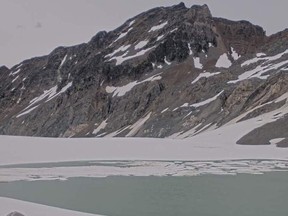
An evacuation order was issued Thursday for at least 24 properties in a rural community near Pemberton because of potential flooding from rapid melt from the Place Glacier.
The Squamish-Lillooet Regional District says residents must leave because of immediate danger to life caused by the risk of overland flooding and debris flood in the Poole Creek and Gates Lake areas, about 30 kilometres northeast of Pemberton.
Anyone who needs emergency support services is asked to go to the Pemberton and District Community Centre on Cottonwood Street in Pemberton.
The residents have been under an evacuation alert since June 7 because of the glacier melting faster than usual in the heat.
—Tiffany Crawford
Firefighters were battling 11 new out-of-control wildfires that broke out Wednesday in B.C., as hot and dry conditions mix with lightning strikes in some areas.
Two of the new rapidly spreading wildfires that ignited Wednesday are south of Lillooet, including the Riley Creek wildfire, located about 25 kilometres south of Lillooet, which is mapped at about 0.5 square kilometres. The other wildfire is smaller and southwest of Lillooet.
Both are believed to have been ignited by lightning. Lillooet is located just over 60 kilometres northwest of Lytton, where the Saw Creek wildfire forced evacuations and a highway closure Friday. That fire is considered to be under control as of Tuesday.
Firefighters were also called out to another quick-moving wildfire that sparked Wednesday evening between Whistler and Pemberton.
—Tiffany Crawford

Extreme heat adds pressure to food supplies already hit by war
The scorching heat sweeping Europe has parched soils, distressed livestock and is keeping farmers away from fields, superseding the Iran war as the greatest challenge to food supplies.
In France, record-breaking temperatures are damaging corn crops and wiping out hundreds of thousands of chickens. In Spain, pigs are losing their appetite and some fruit is threatened at the key blossoming stage. In the U.K., distressed cows are producing less milk.
Though the heat wave will ease by early next week, extreme weather has overshadowed the Middle East conflict as the biggest concern for farmers. Meteorologists are warning of above-normal temperatures for months to come as a developing El Niño compounds the impact of climate change for an industry already facing high fertilizer and fuel costs.
“The next shock to the farmer is potential adverse weather in some parts of the world,” said Les Finemore, chief investment officer at Moreton Capital Partners, which is starting a fund specifically trading El Niño crop risks. “We’ve been focused on the Iranian war situation. The next event will be El Niño.”
El Niño — a climate phenomenon that disrupts normal weather patterns every few years — has contributed to the heat wave across western Europe. This week, temperature highs were reached in the U.K. and France, where a record 72 departments are under red heat alerts, with similar warnings in effect in the U.K., Germany and Switzerland.
—Bloomberg News

Climate crisis making European heat waves much worse in just a few decades, say scientists
A deadly heat wave pushing some temperatures above 40 C in parts of Europe has been made much worse because of the climate crisis, say scientists with the World Weather Attribution.
Researchers from Sweden, Denmark, the United States, the Netherlands, Ireland and the United Kingdom collaborated to assess to what extent human-induced climate change altered the likelihood and intensity of the extreme heat in Western Europe.
They said this heat wave is the most severe ever recorded.
In 2003, the first major heat wave of this century, daytime heat like this would still have been very rare, about 10 times less likely than today, the scientists said while nighttime temperatures such as this June would have been more than a hundred times less likely in 2003.
The analysis shows that intense heat is increasing rapidly, with such heat waves tens to hundreds of times more likely since only 2003 and virtually impossible just 50 years ago.
They said a “rapid phaseout of fossil fuels is critical if we are to avoid even higher temperatures and their consequences in the future.”
—Tiffany Crawford
French evening power prices climbed to the highest since the energy crisis of 2022, as a strengthening heat wave breaks temperature records and shuts the top of the Eiffel Tower early.
Article content
On Monday, a temperature of 43.3 C was recorded at Chateaumeillant in France, according to government forecaster Météo-France. Daytime highs were forecast to climb as high as 42 C in western France through Thursday, while parts of Spain will reach 44 C on Tuesday.
The heat wave is spreading north from mainland Europe, where it’s plagued France for nearly a week. Extreme temperatures, fuelled by a high-pressure heat dome directed across the continent by atmospheric changes from a developing El Niño, have already been linked to several deaths.
French authorities have issued red heat warnings for 54 departments, covering Paris and the western half of the country. A number of cities have already set local temperature records.
Officials closed the Eiffel Tower and the Louvre earlier than normal because of the heat.
—Bloomberg News