
B.C. government rejects claim of massive, secret land transfers to First Nations
The Conservatives claimed more than 97,000 square kilometres, an area the size of Portugal, could be transferred to First Nations
You can save this article by registering for free here. Or sign-in if you have an account.
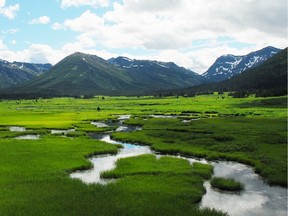
Premier David Eby’s NDP government is rejecting claims by the Opposition that it is involved in a massive and secret handover of public lands to First Nations.

Subscribe now to read the latest news in your city and across Canada.
- Unlimited online access to articles from across Canada with one account.
- Get exclusive access to the Vancouver Sun ePaper, an electronic replica of the print edition that you can share, download and comment on.
- Enjoy insights and behind-the-scenes analysis from our award-winning journalists.
- Support local journalists and the next generation of journalists.
- Daily puzzles including the New York Times Crossword.
Subscribe now to read the latest news in your city and across Canada.
- Unlimited online access to articles from across Canada with one account.
- Get exclusive access to the Vancouver Sun ePaper, an electronic replica of the print edition that you can share, download and comment on.
- Enjoy insights and behind-the-scenes analysis from our award-winning journalists.
- Support local journalists and the next generation of journalists.
- Daily puzzles including the New York Times Crossword.
Create an account or sign in to continue with your reading experience.
- Access articles from across Canada with one account.
- Share your thoughts and join the conversation in the comments.
- Enjoy additional articles per month.
- Get email updates from your favourite authors.
Create an account or sign in to continue with your reading experience.
- Access articles from across Canada with one account
- Share your thoughts and join the conversation in the comments
- Enjoy additional articles per month
- Get email updates from your favourite authors
Sign In or Create an Account
The B.C. Conservatives charged this week that “massive NDP” land transfers in secret deals to First Nations are stripping away decision-making and undermining democracy.

tap here to see other videos from our team.
B.C. government rejects claim of massive, secret land transfers to First Nations Back to video
tap here to see other videos from our team.
The Conservatives, under new leader Kerry-Lynne Findlay, said just more than 97,000 square kilometres, an area the size of Portugal, could be transferred to First Nations. Nearly 96,000 square kilometres of the claimed handover is the entire traditional territory of the Tahltan Nation in northern B.C., which has about 4,000 members.
But no such secret deals are taking place, says the B.C. government.
Eby’s government said Wednesday they are not negotiating a handover of all public lands in the Tahltan territory.
In a written response sent by senior public affairs officer Art Aronson, the ministry of Indigenous relations and reconciliation said there is no mandate to enter into formal Aboriginal title negotiations with the Tahltan.
“Should the ministry seek a mandate to enter into formal negotiations, it would not be seeking a mandate to negotiate for the entirety of Tahltan’s traditional territory,” said the statement.
The ministry did not make anyone available for an interview.
Asked where they sourced their information for the land transfer to the Tahltan, the B.C. Conservatives pointed to a 2020 shared prosperity agreement between the province and the First Nation referenced in a news article.
That public prosperity agreement does not outline a land transfer of all of the Tahltan’s traditional territory.
Instead, it outlines a framework to negotiate a “foundation” understanding that includes shared decisions on resource development in its traditional territory, and identifies lands in the Dease Lake, Iskut and Telegraph Creek areas for transfer to the Tahltan.
The community areas are only a part of the vast, sparsely settled and mineral-rich area which the Tahltan say is their traditional territory.
-
Advertisement 1Story continues belowThis advertisement has not loaded yet, but your article continues below.
The Tahltan could not immediately be reached for comment.
The B.C. Conservatives also pointed this week to 1,350 square kilometres of land transfers outlined in the B.C. government’s recently released public accounts.
“Handing over public assets at this vast scale in secret deals is a direct betrayal of our democracy that treats British Columbians, who own this province, as non-existent,” said Findlay.
The smaller land transfers are part of treaty negotiations which have often been underway for decades and which have been previously publicly reported. For example, the Conservatives pointed to “sweeping” commitments that include 458 square kilometres of public land to be transferred to the Kitsumkalum First Nation in northern B.C. That deal was announced last year.
“Calling this a secret list isn’t just inaccurate, it’s a misrepresentation of what these lands are and why they’re being transferred,” Spencer Chandra Herbert, the minister of Indigenous relations and reconciliation, said in a written statement.
“Unlike other provinces, most of B.C. is not covered by historical treaties. For more than three decades, governments of every political stripe in B.C. have recognized that negotiated agreements are the best path to resolving unresolved Indigenous land claims in B.C. That’s exactly the work these transfers support,” said Herbert.
In alleging huge land transfers, the B.C. Conservatives reiterated their position that B.C.’s legislation that put into force the United Nations Declaration on the Rights of Indigenous Peoples needs to be repealed.
It has been a hot-button issue for Eby’s government after a landmark B.C. Court of Appeal decision last December made the Declaration on the Rights of Indigenous Peoples enforceable in provincial law.
Robert Phillips, a member of the political executive of the First Nations Summit, which focuses on Aboriginal title and rights negotiations with B.C. and Canada, said treaties and other agreements that provide land and create shared decision making, and are supported by the Declaration on the Rights of Indigenous Peoples, are necessary to reconcile Aboriginal title and will help to bolster economic development.
It will not only help First Nations but all of B.C., said Phillips, a member of the Tsq’escen’ First Nation.
“Stop fighting First Nations,” said Phillips of the B.C. Conservative’s strategy. “These agreements, revenue sharing, all of those things, will go not only into the pockets of First Nations, but it will also provide taxation, and go into general revenues of the government.”
He pointed to a decision this year by the Tahltan to consent to a new $900 million open-pit mine on the site of the former Eskay Creek underground mine that closed in 2008. That decision came after a joint assessment with the province. The Skeena gold and silver project is expected to create 800 jobs during construction and 800 jobs during operations.
These agreements bring more certainty, not less, and jobs for Indigenous and non-Indigenous people, said Phillips.
The Tahltan have also supported the $3 billion expansion of the Red Chris copper and gold mine, the Brucejack gold and silver mine, and other developments, including major run-of-river hydroelectric projects. The Tahltan have been working with the B.C. government to protect sensitive ecological areas in their traditional territory, which is home to the world-class Spatzizi Plateau Wilderness, Mount Edziza and the Stikine River provincial parks.
Stewart Prest, a lecturer at the University of B.C., said while it is the B.C. Conservative’s job to oppose the existing government, they are almost demonizing the idea of land claims.
“There is that sense of trying to turn back the clock on these issues and really dividing lines in ways that are going to be polarizing, and also will present enormous challenges if the Conservatives ever were elected as government,” said Prest.
These issues on reconciliation don’t go away with a change of government, and will still have to be resolved, he said.