
It was found, then lost, and then found again: a massive “floating island” in northern B.C. has garnered international attention, making headlines in the New York Times, on the BBC, in National Geographic, and even on TMZ.
But what exactly is it, and why are scientists so fascinated?
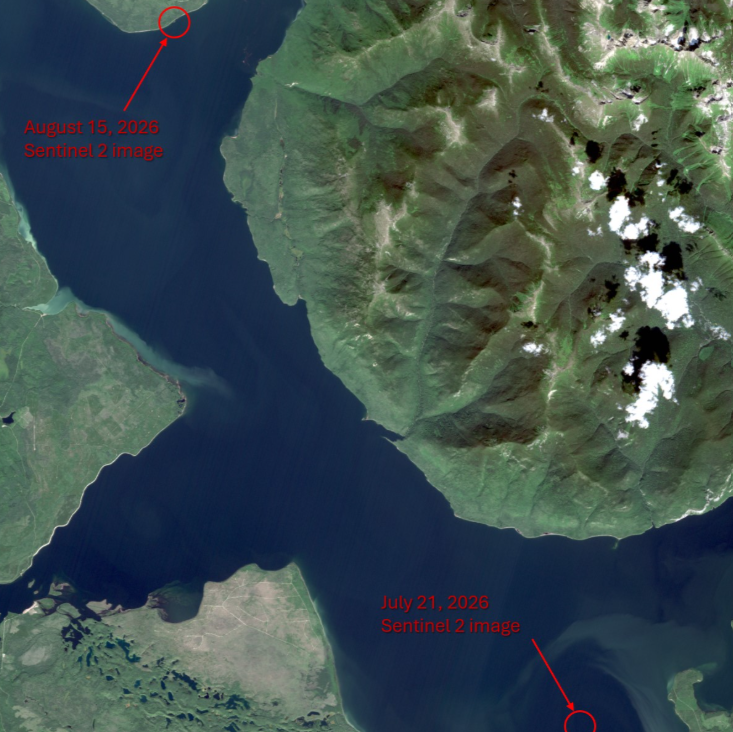
The island — which is thought to be around 140 metres long and 70 metres wide, or about the size of two football fields — was first reported to BC Hydro on Aug. 13. The utility says it was provided with pictures that employees believed to have been taken near Finlay Bay on Williston Reservoir weeks earlier, on July 21.
Then, the mass, which is covered in established vegetation, seemingly disappeared from view.
It was then found again, thanks to the use of satellite imagery, along the shoreline of Ospika Arm — around 30 kilometres from where it was originally documented.

One complication, however, is that satellite imagery isn’t available in real time, meaning imagery may only be available for analysis several days after it is captured. BC Hydro says it didn’t find where it had gone until Aug. 31, when employees were able to see images from Aug. 15, suggesting the island only took two days to travel the 30 km.
Community relations manager Bob Gammer says when he and his colleagues were first made aware of the island, they weren’t sure it was real.
“When we first received photos and video of a floating island covered in trees, we weren’t entirely convinced,” Gammer said.
“In the age of AI, it’s important to verify unusual reports before drawing conclusions. Once we confirmed the island through satellite imagery and other observations, it quickly captured the imagination of the public and the media.”
He says the unusual island has attracted the interest of geologists, ecologists, and other researchers who are interested in how floating vegetated islands form and move.
BC Hydro says floating islands of this size are uncommon, but can develop in large reservoirs.
It isn’t clear how this one came to be, but there are some theories.
“One possible explanation is the island formed from logs and woody debris that accumulated in a sheltered area over many years,” BC Hydro said.
“As the material gradually decomposed, vegetation may have taken root, creating a stable mass of interconnected debris and plant growth.”
The information collected so far could help researchers improve their understanding of this unusual natural phenomenon.
“Finding the island has answered one question, but it has raised several others,” said Gammer. “While we’re pleased to have confirmed the island’s location, there is still more to learn about how it formed and how it came to drift across the reservoir. We’ll continue monitoring the island and learning more about its origins and movement as the story unfolds. Stay tuned.”
For now, the floating mass remains a mystery. While BC Hydro has located it, questions about what allowed it to make the long-distance trek remain unanswered.
One thing BC Hydro does say for sure is that it isn’t a good idea to try to land or climb onto the island, due to the unstable nature of the logs and decaying debris.
“While people are welcome to approach the island by boat or drone to take photos, BC Hydro is asking everyone to stay off the island itself,” it said.